
What Your Subaru Warning Lights Are Telling You
When a warning light appears on your dashboard, your Subaru is letting you know that something needs your attention. Some lights will briefly turn on when you start your vehicle and then turn off right away. That is completely normal. If a light stays on while driving or comes on unexpectedly, it is worth taking a closer look.
Understanding Warning Light Colors
Dashboard lights are designed with different colors to help you quickly understand how serious the issue may be.
Green or blue lights usually mean a feature is active, such as headlights or cruise control.
Yellow or orange lights often point to a problem that should be checked soon, like low tire pressure or a system that needs service.
Red warning lights are more urgent and may signal a safety issue or mechanical problem that should be addressed right away.
Common Subaru Warning Lights Drivers See
Many Subaru drivers will notice a few common warning lights over time. Understanding these can help you react quickly and avoid bigger issues.
The check engine light can come on for several reasons, including something as simple as a loose gas cap or a more involved engine issue.
The oil pressure warning light may indicate low oil levels or a circulation problem that could lead to engine damage if ignored.
The battery warning light often signals a charging system issue, which could leave you stranded if the battery stops working.
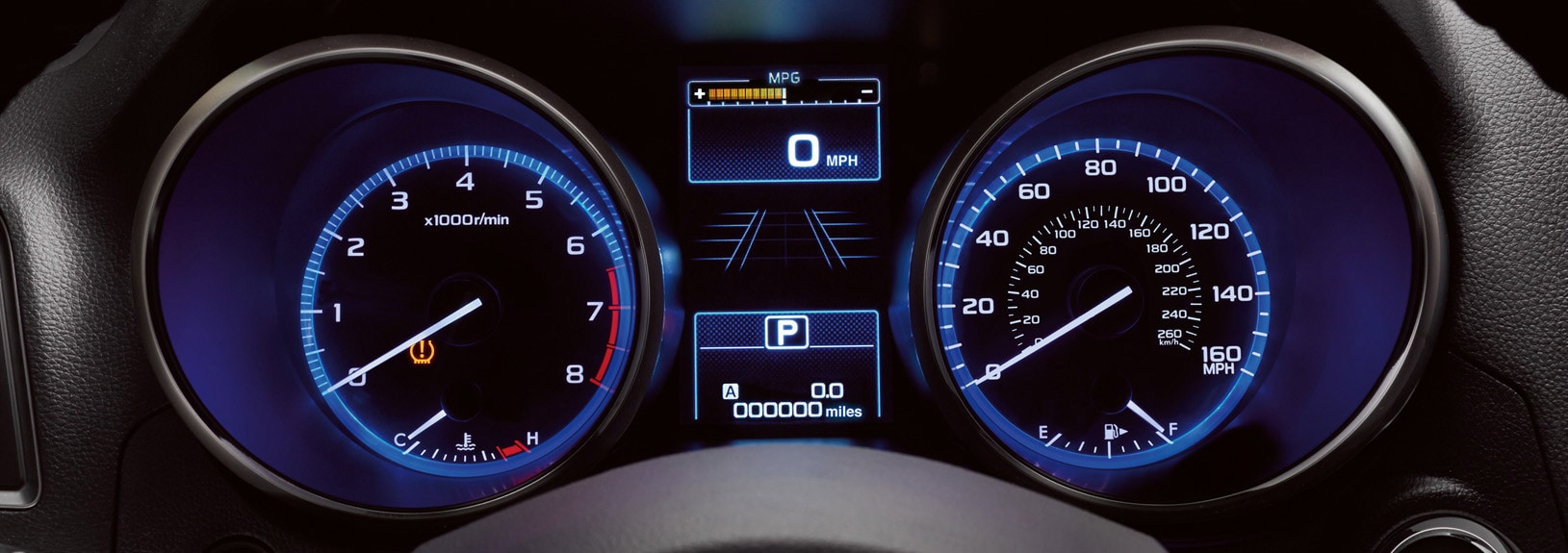
The tire pressure monitoring system (TPMS) light lets you know when one or more tires may be underinflated.
Pay Attention to How Your Subaru Feels
A warning light is important, but it is only part of the picture. If your Subaru feels different while driving, that can be a sign that the issue needs immediate attention.
Watch for unusual noises, reduced power, shaking, or difficulty steering or braking. If any of these happen along with a warning light, it may be best to limit driving until the problem is checked.
Advanced Safety Systems and Alerts
Newer Subaru models include advanced safety features like EyeSight® Driver Assist Technology. These systems rely on cameras and sensors to function properly.
If a sensor becomes blocked by dirt, snow, or heavy rain, you may see a warning light or message. In many cases, cleaning the area around the sensors can resolve the issue. If the light remains, a closer inspection may be needed.
Why You Should Not Ignore Warning Lights
Even if your vehicle seems to be running normally, ignoring a warning light can lead to larger problems over time. A small issue today can turn into a more expensive repair if it is left unaddressed.
Taking care of warning lights early can help protect your Subaru's performance, improve safety, and reduce the risk of unexpected breakdowns.
Get Help With Your Subaru Warning Light
If you are not sure what a dashboard light means or what to do next, you do not have to figure it out on your own. The team at Young Subaru can help diagnose the issue and explain what is going on with your vehicle. Whether it is a quick fix or something more involved, we are here to help you get back on the road with confidence.


![Auto [-] mode indicator (STI)](https://images.dealer.com/subaru/warning-lights/dccd-auto-minus-mode-indicator-sti.png)
![Auto [+] mode indicator (STI)](https://images.dealer.com/subaru/warning-lights/dccd-auto-plus-mode--indicator-sti.png)